- +63 917 870 3486
- admin@pad1925.com
- Muntinlupa City, National Capital Region 1781, Philippines

Environmental Threats Are Business Threats
Why Sustainability Is a Security Priority
Disclaimer: This blog post was created with the assistance of artificial intelligence. The content has been reviewed and edited by humans to ensure accuracy and readability.
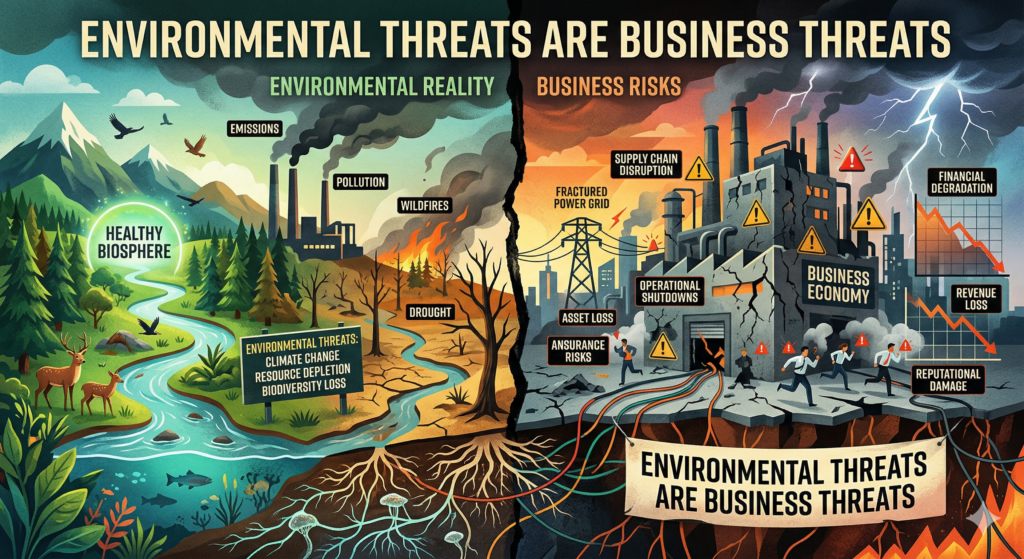
In today’s evolving risk landscape, environmental threats are business threats. Organizations are no longer dealing with isolated risks security challenges now extend beyond physical and cyber concerns to include environmental disruptions that directly impact operations.
From extreme weather events to resource scarcity and stricter regulations, environmental risks are reshaping how businesses approach security. Sustainability is no longer just a corporate responsibility initiative—it is a strategic requirement for resilience and long-term protection.
The Expanding Role of Security in a Changing Environment
Security has traditionally focused on protecting assets, people, and information. Today, that definition must expand.
Modern security frameworks must now account for:
- Climate-related disruptions such as floods, typhoons, and heatwaves
- Energy and water shortages
- Environmental compliance risks
- Supply chain instability caused by ecological factors
These risks are increasingly frequent and highly impactful, particularly in environmentally vulnerable regions. Businesses must move beyond reactive protection and adopt proactive resilience strategies.
How Environmental Threats Impact Business Operations
1. Operational Disruptions
Environmental events can halt operations without warning. Flooding, power outages, and severe weather conditions can make facilities inaccessible and unsafe.
2. Supply Chain Vulnerability
A single environmental disruption can cascade across supply chains, causing delays, shortages, and increased operational costs.
3. Infrastructure Risk
Facilities not designed for environmental resilience are more likely to experience structural damage and system failures.
4. Regulatory Exposure
Governments are enforcing stricter environmental policies. Non-compliance can lead to penalties, operational limitations, and reputational harm.
5. Reputational Impact
Clients, investors, and stakeholders increasingly favor organizations that demonstrate environmental responsibility and sustainability.
Why Sustainability Is a Security Strategy
Understanding that environmental threats are business threats shifts sustainability from a secondary initiative to a core security function.
Risk Reduction
Sustainable practices reduce exposure to environmental disruptions by optimizing resource use and minimizing vulnerabilities.
Business Continuity
Organizations that integrate sustainability into operations are better prepared to maintain continuity during crises.
Cost Efficiency
Proactive environmental strategies help reduce long-term costs associated with damage, recovery, and compliance.
Stakeholder Trust
Sustainability strengthens credibility and builds confidence among clients, partners, and investors.
Integrating Sustainability Into Your Security Framework
To effectively address environmental threats, organizations must take a structured approach:
Conduct Environmental Risk Assessments
Identify vulnerabilities based on location, operations, and industry exposure.
Strengthen Infrastructure Resilience
Invest in systems and designs that can withstand environmental stress, such as improved drainage and backup power systems.
Develop Business Continuity Plans
Ensure environmental scenarios are integrated into emergency preparedness and response strategies.
Optimize Resource Management
Reduce dependency on limited resources through efficiency and sustainable alternatives.
Ensure Regulatory Compliance
Stay aligned with environmental laws and standards to avoid penalties and operational disruptions.
The Strategic Advantage of Proactive Action
Organizations that act early gain a measurable advantage. They are more resilient, adaptable, and better positioned to navigate uncertainty.
Recognizing that environmental threats are business threats allows businesses to shift from reactive crisis management to proactive risk mitigation.
Environmental risks are no longer external concerns—they are immediate business threats that affect operations, reputation, and long-term sustainability.
Sustainability is not just about environmental responsibility. It is a critical component of modern security strategy.
At PAD1925, we advocate for a comprehensive approach to risk management—one that integrates environmental awareness into security planning to ensure resilience, continuity, and long-term success.